
A Dhamma rain shower – Mahamevnawa
2300 years ago emperor Ashoka‘s son, a Buddhist monk by the name of Mahinda, was sent to Sri Lanka to propagate the Buddha’s message to the people of Sri Lanka. He met the king, who happened to be on a…

2300 years ago emperor Ashoka‘s son, a Buddhist monk by the name of Mahinda, was sent to Sri Lanka to propagate the Buddha’s message to the people of Sri Lanka. He met the king, who happened to be on a…
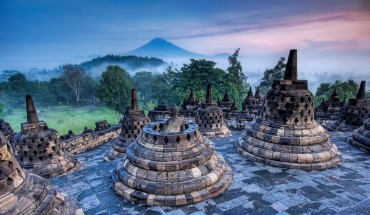
Yesterday I stopped by the new asapuwa in Tampa where Bhante Vimala gave a very, very interesting little Dhamma talk, which I wanted to share with you. It was not planned or anything, but you know me, I like talking…
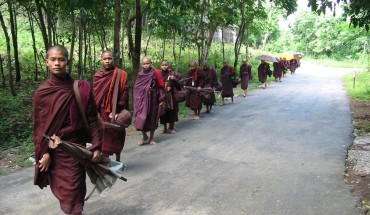
Theragatha v.127-128 ”Tiṇṇaṃ me tālapattānaṃ, gaṅgātīre kuṭī katā; Chavasittova me patto, paṃsukūlañca cīvaraṃ. ”Dvinnaṃ antaravassānaṃ, ekā vācā me bhāsitā; Tatiye antaravassamhi, tamokhandho padālito”ti. == (English) Using three palm leaves I made myself a hut on the bank of the river…

Can a practice that we undertake which does not purify our mind be truly considered “cultivation of the mind”? Let’s forget our concepts and ideas about “meditation” for a moment and look at some words of the Awakened One on…

This is the disciple of the Buddha, living in the house. He has confidence in the Buddha’s awakening. He trains himself to purify his actions and his speech. He cultivates generosity, learns to sacrifice and let go. And this is…
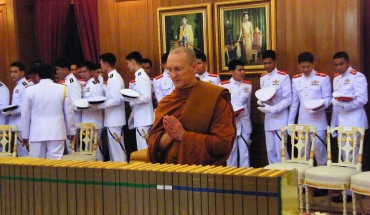
Majjhima Nikaya, Middle collection M. 75th (VIII, 5) Māgandiya Sutta (Māgandiyo) translated from Pāli by Karl Eugen Neumann THIS HAVE I HEARD. At one time the Blessed One was staying in the Kuru country, in a town of the Kurus…

One of the most amazing and completely counter-intuitive “discoveries” of the Buddha is that samvara (typically translated as “discipline” or “restraint”, literally “holding together”, “keeping something shut”) can lead to happiness. One could almost argue that by being so counter-intuitive…
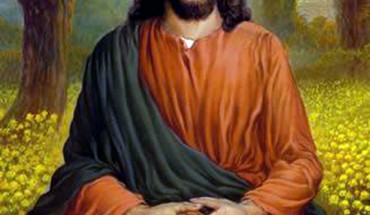
Okay, the following anthology seemed long overdue – I found that especially in a Western Christian environment many Buddhists do not know what the Buddha (or the early Buddhist literature, depending on the degree of your trust) had to say…
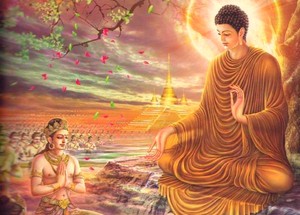
Anicca vata sankhara — impermanent indeed are all formations. These were the words spoken at the Buddha’s passing. A canonical analysis of this profound Pali verse, its context in the Mahaparinibbana Sutta, and what it reveals about vipassana practice and the path to Nibbana.
A single short sutta in the Samyutta Nikaya contains the Buddha’s entire path to Nirvana compressed into five sentences. A close reading reveals why this overlooked teaching is among the most concentrated summaries of the Dhamma in the entire Pali Canon.